
Reviewed by Mandy Wigren, LPC, NCC — licensed professional counselor with 20+ years of experience, specializing in trauma, anxiety, and depression.
Your attachment style develops from the relationship you had with your parents or caregivers during childhood. These early relationships help shape how you form connections later in life, including romantic relationships, friendships, and even professional relationships.
When you understand your attachment style, you can gain insight into how you relate to others and why certain relationship patterns appear in your life. Attachment styles are generally grouped into two main categories: secure and insecure. While secure attachment supports healthy and trusting relationships, insecure attachment styles can make trust, communication, and vulnerability more challenging.
Quick navigation
What does the phrase “attachment style” mean?
Attachment styles describe patterns of thoughts and behaviors that develop in early childhood and influence how people form and maintain relationships throughout their lives.
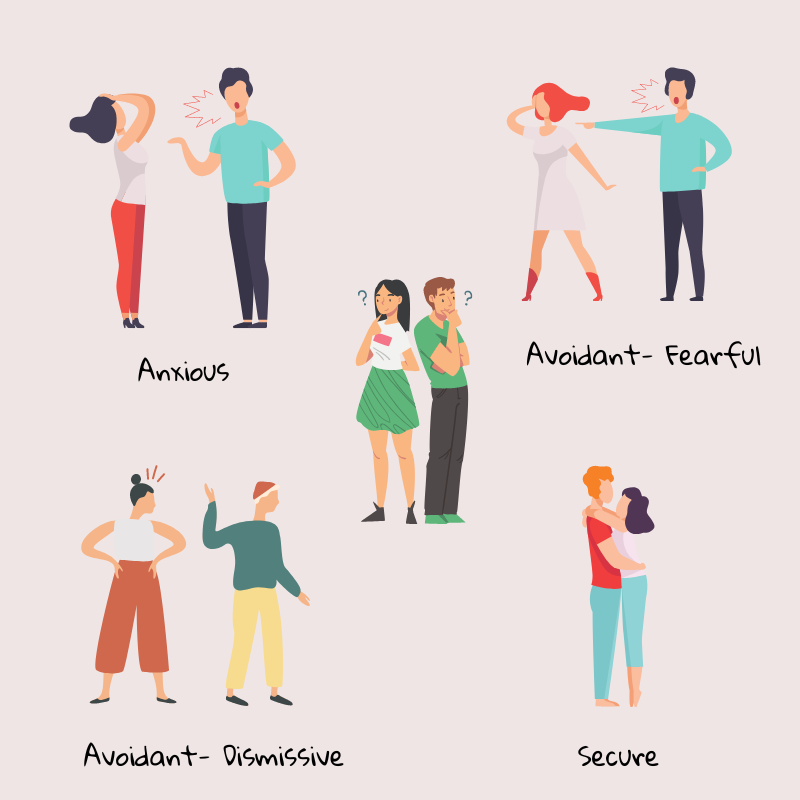
Secure and insecure attachment styles
Infants depend on caregivers for both physical needs (such as food, shelter, and clothing) and emotional needs (such as comfort, affection, and attention). When caregivers respond consistently to these needs, children are more likely to develop a secure attachment style that supports healthy adult relationships. When these needs are not consistently met, an insecure attachment style may develop.
Anxious attachment style
People with an anxious-preoccupied attachment style often rely heavily on their partner for reassurance and validation. They may feel anxious or insecure when their partner is unavailable and may frequently seek reassurance. This can sometimes lead to clingy behavior or jealousy within relationships.
Avoidant-fearful attachment style
People with a fearful-avoidant attachment style may strongly desire closeness and connection but also fear vulnerability or emotional intimacy. This can create mixed feelings in relationships, where they want connection but also struggle with trust or worry about getting too close.
Avoidant-dismissive attachment style
People with a dismissive-avoidant attachment style often prioritize independence and self-sufficiency over emotional closeness. They may seem emotionally distant and may struggle to communicate their feelings or express their needs within relationships.
Secure attachment style
People with a secure attachment style generally feel comfortable with closeness while also maintaining independence. They tend to communicate openly with their partners and build relationships based on trust, support, and healthy emotional connection.
Looking for help?
If you believe your relationship challenges may be connected to your attachment style, speaking with a therapist who understands attachment theory can help.
MLWigren Consulting, led by Mandy Wigren, LPC, NCC, provides counseling for teens and adults navigating anxiety, trauma, depression, and other life challenges. Based in Michigan, the practice offers both in-person and online therapy options.
Reach out today to schedule a free 15-minute consultation and learn how therapy can support healthier relationships and personal growth.
Reviewed by Mandy Wigren, LPC, NCC
Her clinical work focuses on teens and adults experiencing trauma, anxiety, depression, and adjustment concerns. She has also completed training in domestic violence and sexual assault response.