
Like adults, teenagers can struggle with a whole range of emotional challenges, including anxiety. But unlike adults, even mature teenagers may not have the resources to know that they need help. If you often notice your teen feeling restless, agitated, or overwhelmed with worries, they could be struggling with anxiety. Anxiety can impact their ability to thrive in school, affect family dynamics, strain relationships, and complicate social interactions. As a parent, you can guide your teenager to the support they need to manage their anxiety and gain the coping skills to succeed in life.
Key points
- Anxiety is common among teenagers
- Many different factors can contribute to teenage anxiety
- There are many forms of anxiety
- Choose an effective treatment path for anxiety
Quick Navigation
Overview
Do you observe your teenager frequently experiencing restlessness, fear, or irritation? Are intrusive thoughts a common occurrence for them? Do they often seem insecure and preoccupied with what others think of them? These emotional struggles might indicate an underlying anxiety disorder, but the good news is that anxiety often responds well to treatment.
Anxiety is extremely common among teenagers
According to the World Health Organization, anxiety disorders are the most common mental health struggles among young adults. In fact, 58% of adolescents report experiencing anxiety. Psychologists and social workers have noted an increase in the severity and frequency of emotional issues among teenagers. One study found that 87% of young adults suffer from mental health struggles on a regular basis.
Contributions to teenage anxiety
Factors that contribute to heightened levels of anxiety in teenagers can include:
- Remote learning
- Limited time with friends
- Excessive screen time
- Increased indoor activities
Additionally, many teens report high levels of anxiety relating to social struggles, educational pressure, and an overall sense of uncertainty and insecurity. It can be challenging to cope with these stressors, and some teenagers may resort to unhealthy behaviors like alcohol use, smoking, or vaping as a means of self-medication.
Anxiety levels, once elevated, tend to stay high or get higher
Everyone is hard-wired to react to anxiety. When our brain perceives hazards, such as a bear emerging from the woods or a speeding car approaching, anxiety helps us respond to the threat. When we are concerned about missing a plane, we sprint to the gate. When we need to meet a deadline at work or school, we get an extra burst of energy.
When we don’t respond effectively to an anxiety trigger, or if the trigger persists over time, we can get stuck in stress-induced mental pathways. We may develop unhealthy and negative coping patterns that keep us stuck and feeling anxious even after the initial trigger has passed.
Teenagers are particularly vulnerable to getting stuck in negative thought patterns due to fluctuating hormones, increased social struggles, and difficulties understanding and managing everyday stressors and the emotions that may arise from these experiences. This can cause teens to feel consistently anxious and unable to cope effectively.
Types of anxiety disorders
Anxiety can appear differently in different people and at different times in their lives. Generalized anxiety disorder, panic attacks, and social anxiety are all common anxiety-related disorders among teenagers.
Symptoms
The specific symptoms your teenager experiences may depend on the type of anxiety disorder they have.
- Social anxiety can make it difficult for your teen to speak up at school, engage in social situations, or even leave the house.
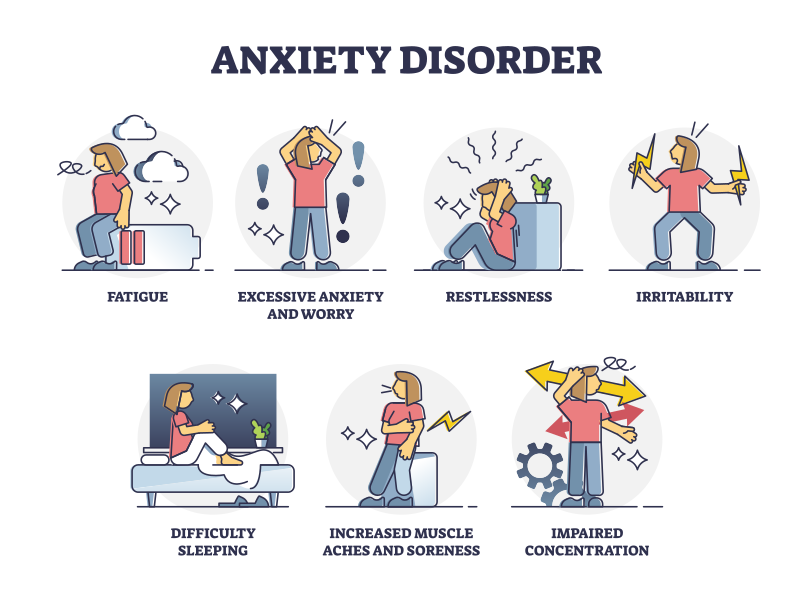
- Generalized anxiety disorder (GAD) usually involves persistent feelings of anxiety or dread. Other symptoms include feeling on edge or restless, fatigue, difficulty concentrating, difficulty sleeping, irritability, headaches, muscle aches, stomachaches, or other pain without a clear source.
- Panic attacks may involve experiencing an accelerated heart rate, sweating, trembling, chest pain, or feeling out of control.
- Phobias are intense fears that are out of proportion to the actual danger posed by the object or the situation. Some examples of phobias include fear of flying, heights or being in an enclosed space.
Causes and risk factors
Various factors contribute to the development of anxiety disorders in teenagers, including genetic predisposition, environmental stressors, family history of anxiety, and other mental health challenges within the family. Certain physical conditions and substance abuse can also increase the likelihood of anxiety disorders in teenagers.
Treatment for anxiety
Common treatments for anxiety include:
- Cognitive Behavioral Therapy (CBT) teaches alternative ways of thinking, responding, and reacting to situations in order to reduce anxiety and fear. CBT has been extensively researched.
Exposure therapy is a CBT technique for the treatment of anxiety disorders. - Exposure therapy focuses on tackling the worries underlying an anxiety condition in order to assist your teen in engaging in activities they have been avoiding. Sometimes, exposure treatment is combined with relaxation exercises.
- Acceptance and Commitment Therapy (ACT) employs mindfulness, goal-setting, and other strategies to alleviate discomfort and anxiety.
- Medication can help support healthy lifestyle changes. You may find that medication stabilizes your teen’s mood, improves their ability to function at home and school, and helps them start taking better care of themselves. Medication is often a complement to psychotherapy and holistic care, reinforcing your teen’s ability to stick to healthy sleep, nutrition, and exercise routines.
Reach out
If your teen is struggling with anxiety, reach out today and gain the support you need to help them become happier and healthier.
More information
Anxiety Disorder. National Institute of Mental Health. https://www.nimh.nih.gov/health/statistics/any-anxiety-disorder
Henning, M., Subic-Wrana, C., Wiltink, J., & Beutel, M. (2020). Anxiety Disorders in Patients With Somatic Diseases. Psychosomatic Medicine.
Nelson, H., Cantor, A., Pappas, M., & Weeks, C. (2020). Screening for Anxiety in Adolescent and Adult Women. Annals of Internal Medicine.
What’s the difference between stress and anxiety? American Psychological Association. https://www.apa.org/topics/stress/anxiety-difference